
Provider/Grant Support
This activity is jointly provided by Partners for Advancing Clinical Education and Nexus Healthcare Education.
This activity is supported by an independent educational grant from Sanofi.
Credits Available
- Physicians — maximum of 1.25 AMA PRA Category 1 Credits™
All other healthcare professionals completing this course will be issued a statement of participation.
Target Audience
Neurologists, neuromuscular specialists, physicians, nurses, pharmacists, and other healthcare providers involved in the management of CIDP.
Program Overview
This recording of the case-based live webinar is focused on advancing diagnostic accuracy and optimizing treatment strategies in chronic inflammatory demyelinating polyneuropathy (CIDP). Explore how to confidently apply diagnostic guidelines to distinguish typical and variant forms of CIDP, recognize the impact of diagnostic errors, and integrate shared decision-making into individualized treatment planning. Review the benefits and limitations of established therapies alongside emerging insights into CIDP pathophysiology and novel therapeutic approaches, including highlights from the 2025 American Association of Neuromuscular & Electrodiagnostic Medicine (AANEM) Annual Meeting.
The aim of this activity is to enhance healthcare providers’ ability to accurately diagnose and effectively manage CIDP by applying current evidence-based guidelines and integrating new clinical insights. Participants will gain practical strategies to optimize individualized treatment decisions, incorporate shared decision-making, and remain informed on emerging therapeutic approaches.
Learning Objectives
Upon completion of this activity, participants should be better able to:
- Apply the 2021 EAN/PNS diagnostic guidelines to accurately identify both typical and variant forms of CIDP, with an emphasis on learning how to confidently interpret electrodiagnostic findings and distinguish CIDP from possible CIDP
- Recognize the clinical heterogeneity of CIDP and implement strategies to reduce misdiagnosis, underdiagnosis, and diagnostic delays
- Evaluate the benefits and limitations of traditional CIDP treatments (ie, IVIG, SCIG, corticosteroids, plasma exchange) and identify patient-specific factors that influence treatment selection
- Incorporate shared decision-making practices into CIDP management, ensuring that patient priorities, such as minimizing side effects and optimizing QoL, are central to treatment planning
- Summarize current understanding of CIDP pathophysiology, including the role of autoantibodies, complement activation, and T-cell mediated nerve damage
- Appraise recent clinical trial data for novel therapies targeting CIDP pathophysiology and discuss their potential implications for future practice
Faculty
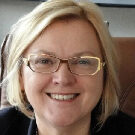
Vera Bril, BSc, FRCPC, MD
Professor of Medicine, Division of Neurology, University of Toronto,
Director of Neurology and Krembil Family Chair in Neurology, University Health Network, Toronto Western Research Institute, Toronto, Canada
Director of Neurology, Mount Sinai Hospital, NY, USA
Professor Vera Bril is an expert in the diagnosis and management of patients with complex neuromuscular disorders. Her research interests center on the diagnosis and evidence-based treatment of myasthenia gravis, inflammatory polyneuropathies, and diabetic sensorimotor polyneuropathy. Her work has helped set the standards for electrophysiological investigations in the definition and evaluation of the progression of chronic polyneuropathies. Her research has contributed to understanding the role of intravenous immunoglobulin in the treatment of myasthenia gravis and Guillain-Barré syndrome, and the long-term treatment of chronic inflammatory demyelinating polyneuropathy.
Professor Bril has acted as an advisor to Health Canada and the US Food and Drug Administration. She also serves as the Deputy Physician-in-Chief for Economic Affairs for the Department of Medicine at University Health Network and Mount Sinai Hospital and Chair of the Economics Committee. She is part of the Department of Medicine Executive Committee and helps administer this group of 300 physicians.

Jeffrey Allen, MD
Professor, Department of Neurology, University of Minnesota, MN, USA
Professor Jeffrey Allen completed his neurology residency at Tufts University in Massachusetts, followed by a fellowship in neuromuscular medicine at Harvard Medical School. His research focuses on advancing the diagnosis and treatment of inflammatory neuropathies.
Professor Allen is actively involved in several professional organizations, including the Peripheral Nerve Society, the Inflammatory Neuropathy Consortium, the American Academy of Neurology, and the American Association of Neuromuscular & Electrodiagnostic Medicine. He currently serves as Chairman of the Global Medical Advisory Board for the Guillain-Barré syndrome/chronic inflammatory demyelinating polyneuropathy Foundation International™ and as Treasurer of the Peripheral Nerve Society.

Karissa L. Gable, MD
Professor of Medicine
Neuromuscular Medicine Fellowship Director
Director, Neurology medical student clerkship for the School of Medicine, Duke University Medical Center, Durham, NC, USA
Professor Karissa Gable received her medical degree from the University of North Carolina School of Medicine. She completed a residency in adult neurology at Northwestern Memorial Hospital in Chicago and a fellowship in neuromuscular medicine at Harvard Medical School–Massachusetts General Hospital/Brigham and Women's Hospital in Boston. She is a diplomate in neurology, electrodiagnostic medicine, and neuromuscular medicine.
Professor Gable’s research interests lie in autoimmune neuromuscular disease, with a special interest in neuromuscular junction disease and autoimmune neuropathies such as chronic inflammatory demyelinating polyneuropathy, and she has published widely in peer-reviewed journals in this field.

Luis Querol, MD, PhD
Neuromuscular Diseases Unit, Autoimmune Neurology, Neuromuscular Lab
Neurology Department, Hospital de la Santa Creu i Sant Pau
Institut de Recerca Biomèdica Sant Pau, Barcelona, Spain
Dr Luis Querol completed his PhD in Medicine at the Universidad Autónoma de Barcelona where he identified clinically useful antibodies in autoimmune neuropathies and the first clinically useful marker in chronic inflammatory demyelinating polyradiculoneuropathy (CIDP). Through his later work, Dr Querol enabled the discovery and validation of several other autoantibodies in this disorder, which are currently implemented in the clinical routine and commercialized under an ISO9001-approved protocol. Dr Querol has participated in the generation of recent diagnostic and therapeutic guidelines of the European Academy of Neurology/Peripheral Nerve Society, in which he was appointed team leader of the biomarker group, and in multiple Steering Committees of clinical trials in antibody-mediated neuropathies.
Dr Querol is the Coordinator and Principal Investigator for the Autoimmune Neurology Program of the European Rare Diseases Network-Neuromuscular Diseases Neuromuscular Sant Pau and Associate Professor in Neurology at the Universitat Autònoma de Barcelona.
Accreditation Statement

In support of improving patient care, this activity has been planned and implemented by Partners for Advancing Clinical Education (Partners) and Nexus Healthcare Education. Partners is jointly accredited by the Accreditation Council for Continuing Medical Education (ACCME), the Accreditation Council for Pharmacy Education (ACPE), and the American Nurses Credentialing Center (ANCC), to provide continuing education for the healthcare team.
Credit Designation
Partners for Advancing Clinical Education designates this live activity for a maximum of 1.25 AMA PRA Category 1 Credit™. Physicians should claim only the credit commensurate with the extent of their participation in the activity.
Disclosures of Conflict of Interest
Vera Bril
Received consultancy fees from Akcea Therapeutics, Inc., Alexion Pharmaceuticals, Inc., Alnylam Pharmaceuticals, Inc., Argenx, AstraZeneca, CSL, F. Hoffmann-La Roche Ltd, Grifols, Immunovant, Inc., Ionis Pharmaceuticals, Janssen Global Services, LLC, Japan Tobacco, Johnson & Johnson Services, Inc., Momenta, Novo Nordisk A/S, Octapharma USA, Inc., Pfizer Inc., Powell Mansfield Inc., Sanofi, and Takeda Pharmaceutical Company Limited.
Received research and grant support from Akcea Therapeutics, Inc., Alexion Pharmaceuticals, Inc., Argenx, AstraZeneca, CSL, Grifols, Immunovant, Inc., Ionis Pharmaceuticals, Johnson & Johnson Services, Inc., Momenta, Octapharma USA, Inc., Takeda Pharmaceutical Company Limited, and UCB S.A.
Jeffrey Allen
Received consultancy fees from Alexion Pharmaceuticals, Alnylam Pharmaceuticals, Annexon Biosciences, Argenx SE, CSL Behring, Johnson & Johnson Innovative Medicine, Sanofi, and Takeda Pharmaceutical Company Limited.
Karissa Gable
Received consultancy fees from Annexon Biosciences, Argenx SE, CSL Behring, Dianthus Therapeutics, Immunovant, Grifols, and Sanofi.
Luis Querol
Received research grants from Argenx SE, Biomedical Research Networking Center on Rare Diseases (CIBERER), Fundació La Marató, GBS-CIDP Foundation International, and Instituto de Salud Carlos III – Ministry of Economy and Innovation (Spain)
Received speaker or expert testimony honoraria from Annexon Biosciences, Alnylam Pharmaceuticals, Argenx SE, Avilar Therapeutics, BioCryst Pharmaceuticals, CSL Behring, Dianthus Therapeutics, Laboratoire Francais du Fractionnement et Des Biotechnologie (LFB), Lycia Therapeutics, Montis, Novartis, Nuvig Therapeutics, Sanofi-Genzyme and Takeda Pharmaceutical Company Limited
Serves on Clinical Trial Steering Committees for Argenx SE, Takeda Pharmaceutical Company Limited, and Sanofi Genzyme
Serves as Principal Investigator for UCB’s CIDP01 trial and Sanofi’s Mobilize and Vitalize trials.
Instructions for Participation and Credit
There are no fees for participating in and receiving CME credit for this enduring activity. To receive CME credit participants must:
- Read the CME/CE information and faculty disclosures.
- Participate in the online activity.
- Submit the evaluation form.
Certificates will be immediately available to the participant.
Disclosure of Unlabeled Use
This educational activity may contain discussion of published and/or investigational uses of agents that are not indicated by the US Food and Drug Administration. The planners of this activity do not recommend the use of any agent outside of the labeled indications. The opinions expressed in the educational activity are those of the faculty and do not necessarily represent the views of the planners. Please refer to the official prescribing information for each product for discussion of approved indications, contraindications, and warnings.
Disclaimer
Participants have an implied responsibility to use the newly acquired information to enhance patient outcomes and further their own professional development. The information presented in this activity is not meant to serve as a guideline for patient management. Any procedures, medications, or other courses of diagnosis or treatment discussed or suggested in this activity should not be used by clinicians without evaluation of their patient’s conditions and possible contraindications and/or dangers in use, review of any applicable manufacturer’s product information, and comparison with recommendations of other authorities.
Contact Information
For CME questions please contact: learning@nexushehub.com